
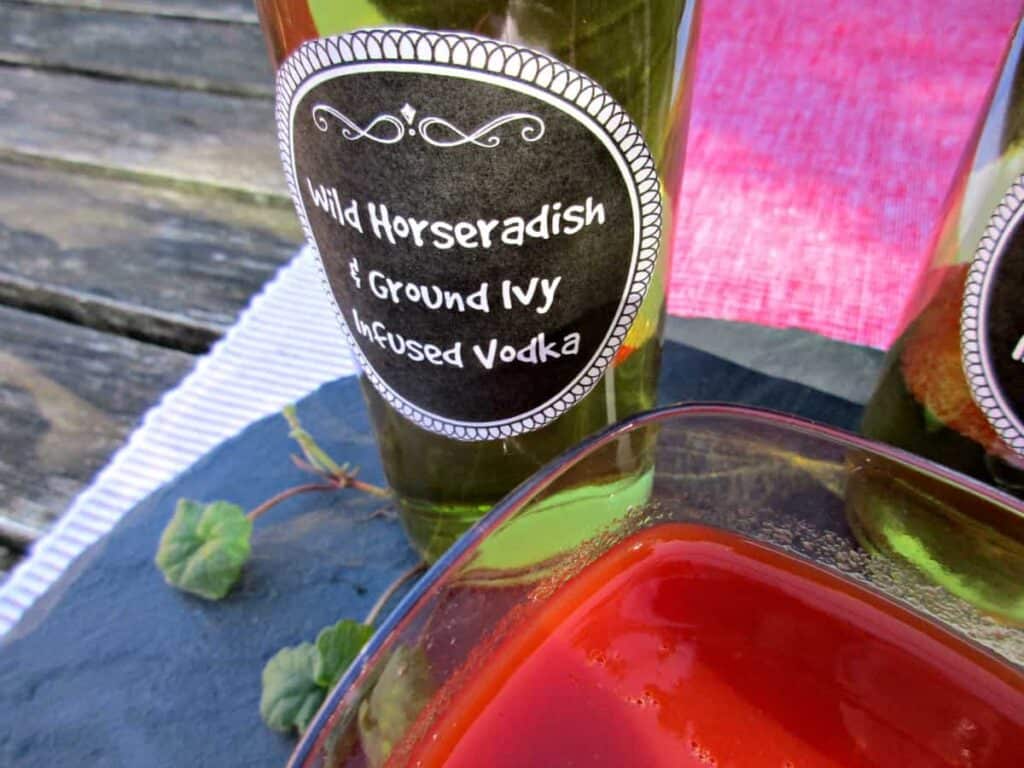
Ground Ivy and Horseradish Vodka has a distinctive savoury aroma and peppery flavour, perfect for making delicious Bloody Mary Cocktails.
What is Wild Horseradish (Armoracia Rusticana)
Horseradish (Armoracia rusticana) is an aromatic perennial in the Brassicaceae family that has a history of cultivation worldwide for thousands of years. During the Middle Ages, the leaves and roots were used for treating asthma, arthritis, cancer and toothaches. Today it is mainly used for its pungent roots, which are grated and used as a condiment.
Well established in Britain, horseradish is an ancient introduction and a native of Asia. Believed to have naturalised in this country through medieval garden escapees, wild horseradish loves disturbed and damp ground. We most commonly find it growing on roadside verges in our location.
Horseradish plants have tall dock-like leaves reaching up to 1m from the ground and large tapered roots. Their leaves are shiny and have a wavy edge, and their flower stalks have many tiny, white cruciform flowers that appear in clusters on the long stem.
When crushed, the leaves give off the smell of horseradish.

What part of the plant can be eaten?
The leaves, flowers and roots of the horseradish plant are edible.
Young horseradish leaves have a strong, bitter flavour and can be eaten raw or cooked. Try adding them to salads, pickles or cooked as a potherb. Horseradish root, best harvested in early winter, can be used as a culinary herb in sauces, powders and vinegar for flavouring meats, vegetables and pickles. It is intensely flavoured and traditionally used in the UK to make horseradish sauce.
Note: Wild horseradish root cannot be harvested without permission from the landowner (this includes common land) as it involves digging up the plant.
What is ground ivy?
Ground Ivy (Glechoma hederacea) is an edible, aromatic, perennial, evergreen creeper of the mint family Lamiaceae. Commonly known as creeping charlie and alehoof, amongst other names, it is a clump-forming, fragrant plant that likes woodlands, hedgerows and damp places. Thanks to its aromatic bitter flavour, ground ivy is a delicious wild herb to cook with; You can find some of my recipes featuring ground ivy below.
- Easy and delicious ground ivy, butternut squash and bacon quiche
- Delicious ground ivy and crow garlic cheese rolls
You can find everything I know about ground ivy in my post, Glechoma hederacea: cultivation, culinary and herbal uses of ground ivy. (coming soon)

A note on foraging.
- Only collect and eat wild foods that you are 100% sure you have identified correctly.
- Common sense says that if you entirely strip an area of wild food, you will damage that habitat, so only collect where food is bountiful and take reasonable amounts.
- Be aware of what happens in the area you are harvesting in. Plants near busy roads may be absorbing emissions from vehicles. If nearby fields are sprayed with pesticides, chances are some will also make their way onto wild plants. And if watercourses are polluted, your native plants will drink that water.

What you need to make ground ivy and horseradish vodka
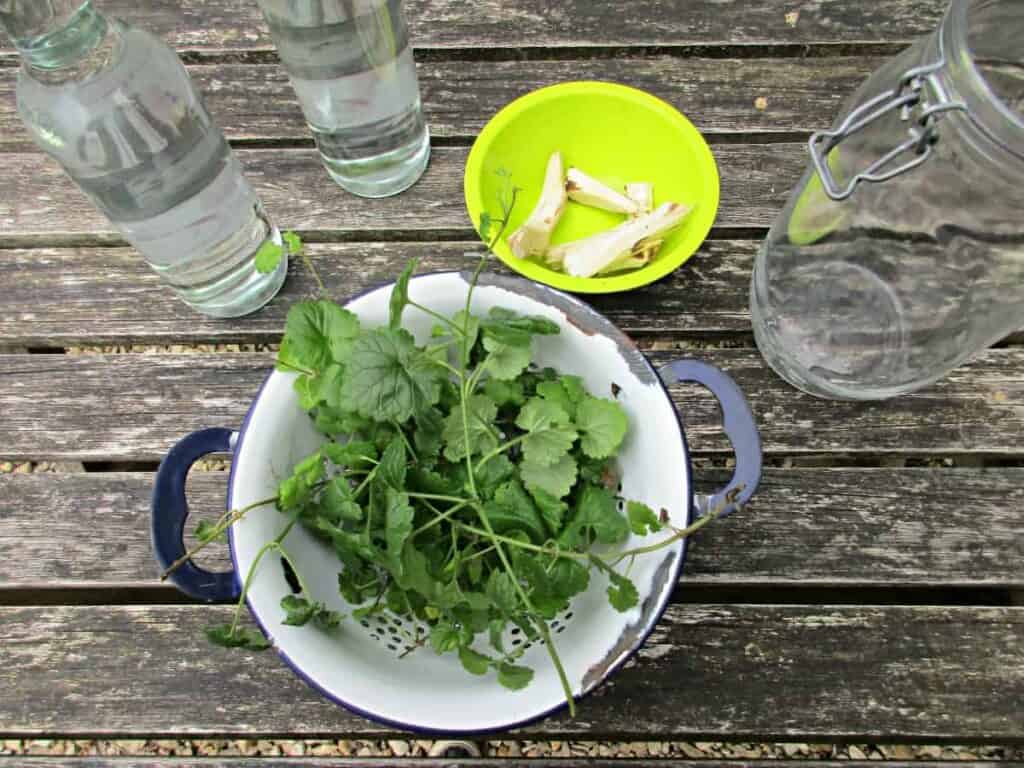
- About six 2-3 inch pieces of horseradish root, peeled
- Large handful of ground ivy
- 1 litre Vodka
- Large glass preserving jar (Amazon Affiliate link)
- Glass Bottles (Amazon Affiliate link)
Note: I often make wild horseradish sauce and horseradish flavoured vodka at the same time. That way, you can use more choice pieces of horseradish root in the sauce and the trimmings for infusing the vodka.
How to make wild horseradish vodka
Place the horseradish root in a glass jar with the ground ivy and pour over the vodka.
Leave in a cool dark place to infuse for three months.
Once the horseradish flavoured vodka has infused, strain out the solids and bottle.
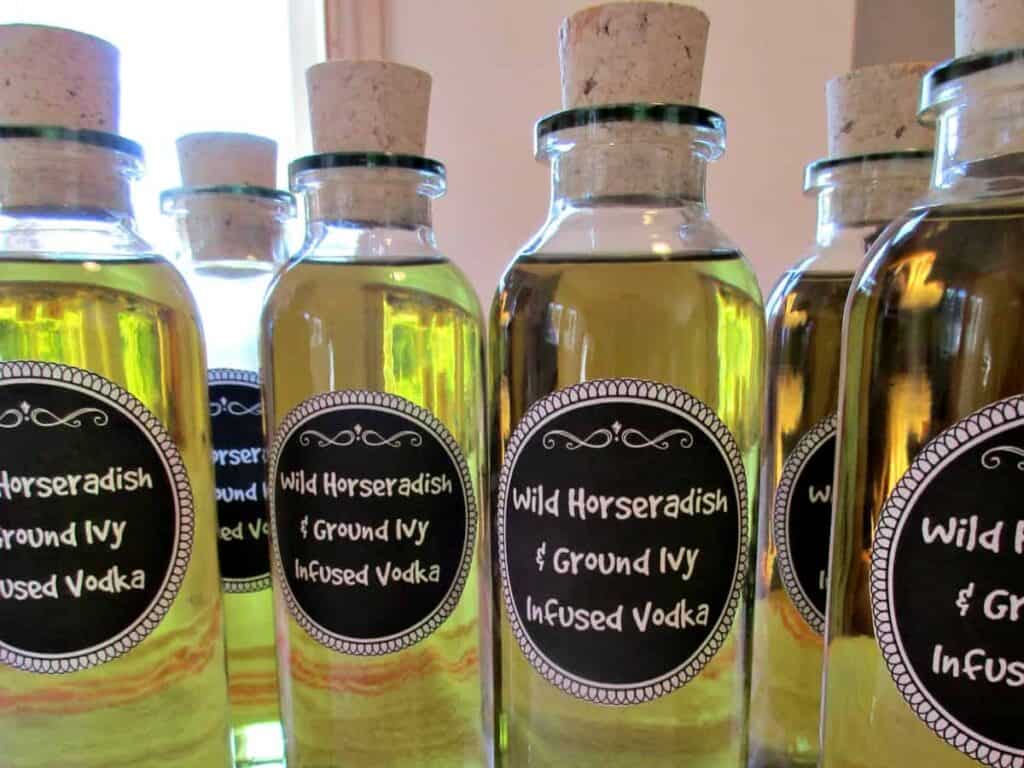
Ground ivy and horseradish vodka has a delicate green colour with a delicious savoury aroma and flavour. It certainly has a bit of a kick but is surprisingly palatable, even on its own.
Added to tomato juice as a Bloody Mary cocktail, it tastes fantastic. Try serving for a boozy brunch or as an aperitif before a meal.

More wild infusions.
If you have enjoyed this ground ivy and horseradish vodka recipe, you might want to check out these other wild infusions.

